
Kathmandu – Pokhara – Muktinath Tour
7 days
| Hotel category | Indian nationals — per person | Foreign nationals — per person |
|---|---|---|
| 3-star deluxe hotel | INR 45,000 | USD 1,000 |
| 5-star deluxe hotel | INR 55,000 | USD 1,100 |
Muktinath Temple
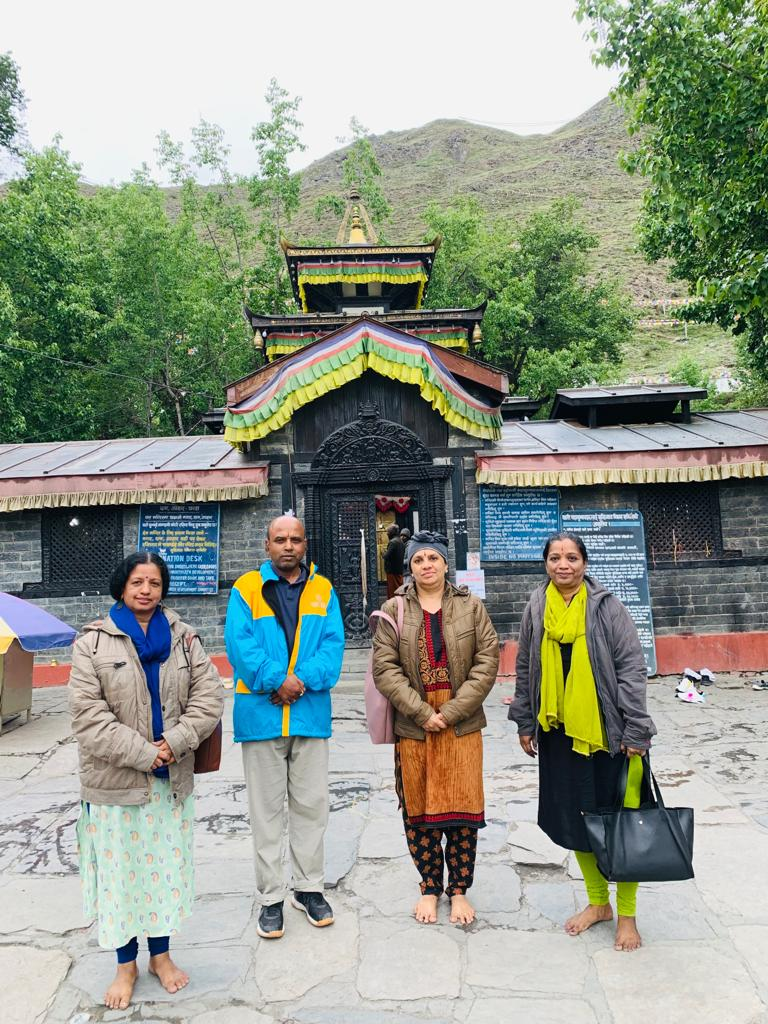
Muktinath is sacred to both Hindus and Buddhists. It lies in Muktinath Valley, behind the Great Himalayas, at an altitude of 3,800 metres along the Annapurna trekking route in Mustang, Nepal. Mukti Kshetra, described as one of the 51 Shakti Peethams, literally means the place of liberation or moksha. It is mentioned in Hindu scriptures including the Ramayana, Varaha Purana and Skanda Purana. Pilgrims take a ritual bath under its 108 sacred water spouts. Nearby Jwala Mai Temple is worshipped by Hindus and Buddhists, and an eternal blue flame burns inside.
Thousands of devotees and visitors travel here each year. The temple brings together Hindu and Buddhist traditions: a Hindu deity is served by Buddhist nuns known as Jhuma or Aani. The temple’s Jhuma priestesses are not permitted to marry.
The region is also known for Shaligram fossils found along the Kali Gandaki River, which Hindus regard as representations of Lord Vishnu. The temple is dedicated to Vishnu and has a simple pagoda-style design. It is believed to have been constructed in the early 19th century, while the Vishnu idol is considered to date from the 16th century. Hindu pilgrims from Nepal and India visit to worship Vishnu. Buddhists call the site Chumig Gyatsa, meaning Hundred Waters in Tibetan. Although the temple has Vaishnava origins, it is also revered in Buddhism.
Pashupatinath Temple — पशुपतिनाथ मन्दिर
Pashupatinath Temple, a UNESCO World Heritage Site situated 5 km east of Kathmandu, is one of the world’s most sacred Hindu shrines dedicated to Lord Shiva. It is among the largest and best-known Shiva temples, attracting thousands of Hindu pilgrims and tourists each year. Its two-tiered pagoda has golden roofs and four silver doors and houses the sacred linga, a symbol of Lord Shiva. Chronicles indicate that the temple existed before AD 400.
Guhyeshwari Temple — गुह्येश्वरी मन्दिर
Also spelled Guheswari or Guhjeshwari, this revered Kathmandu temple is dedicated to Adi Shakti. It is a Shakti Peetham near Pashupatinath Temple on the banks of the Bagmati River. According to mythology, a part of Sati Devi’s body fell here as a grief-stricken Shiva wandered the earth carrying her body after her self-immolation.
Swayambhunath Stupa — स्वयम्भूनाथ
Swayambhunath, a UNESCO World Heritage Site, stands on a hill 3 km west of Kathmandu. It is among the Kathmandu Valley’s most ancient and enigmatic shrines. The 15th-century Swayambhu Purana tells of a miraculous lotus planted by a past Buddha in the lake that once covered the valley. The lotus radiated a brilliant light, giving the site its name, meaning Self-Created or Self-Existent. Saints, sages and divinities travelled to venerate the light for its power to grant enlightenment. Shantipur, known as the Palace of Peace, is another temple on the hill. The site offers panoramic views of Kathmandu.
Budhanilkantha (Jal Narayan) — बुढानीलकण्ठ
Budhanilkantha, also known as Jal Narayan, lies at the foot of Shivapuri Hill, 8 km north of Kathmandu’s city centre. The large granite statue of Lord Vishnu reclines on a bed of serpents, known as Nagas, and appears to float in a pond. Described as the largest of Vishnu’s stone statues, this shrine dates to the 5th century.
Boudhanath Stupa — बौद्धनाथ स्तूप
Boudhanath Stupa, a UNESCO World Heritage Site, is one of Nepal’s most imposing landmarks and its largest stupa, about 7 km east of Kathmandu. Also known as Khasti Chaitya, it is one of the country’s oldest stupas and a renowned Buddhist pilgrimage site. Nearby monasteries and gompas are richly decorated and colourfully painted. Nepalese chronicles date the stupa to the reign of King Manadeva (AD 464–505).
Manakamana Temple — मनकामना
Manakamana Temple in Gorkha district is dedicated to Goddess Bhagwati, an incarnation of Parvati. A 15-minute cable car ride leads up the hill. Its name combines mana, meaning heart, and kamana, meaning wish. Venerated since the 17th century, the goddess is believed to grant the wishes of pilgrims who worship at her shrine. The temple lies 12 km south of Gorkha town on a ridge 4,272 feet above sea level.
Pokhara Programme — पोखरा
An optional early morning drive to Sarangkot offers sunrise views. Return to the hotel for breakfast before half-day sightseeing in Pokhara. Visit Bindhyabasini Temple, a popular Hindu pilgrimage site; Devi’s Fall, locally known as Patale Chhango or Hell’s Fall, about 2 km southwest of Pokhara Airport on the Siddhartha Highway; and Gupteshwor Cave, a sacred cave opposite the waterfall that is nearly 3 km long.
Fewa, Begnas and Rupa lakes add to Pokhara’s beauty. Mountain lovers can enjoy views of Machhapuchhre (Fishtail), the five peaks of Annapurna, Dhaulagiri, Himchuli and other peaks. The valley combines dramatic mountain views with a subtropical setting and colourful bazaars. Later, take time to shop for souvenirs.
Accommodation
| Location | Nights |
|---|---|
| Kathmandu | 3 |
| Pokhara | 2 |
| Jomsom — guest house | 1 |